

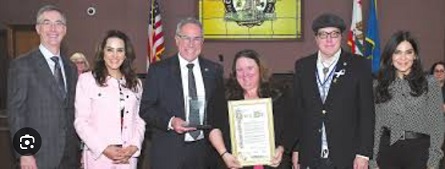
True leadership is rarely about occupying a corner office or commanding a large workforce. Instead, it is increasingly defined by the ability to uplift others, foster collaboration, and build resilient communities. In an era where social disconnection and economic volatility often dominate the headlines, figures like Jonathan Mordechaev stand out by demonstrating how visionary leadership can serve as a catalyst for genuine community empowerment.
Leadership, when executed with empathy and strategic foresight, does more than just solve immediate problems. It creates a framework for sustainable growth. By examining the principles that drive leaders like Mordechaev, we can uncover a roadmap for how individuals can transform their local environments. This deep dive explores the mechanics of community empowerment, the specific leadership qualities that drive it, and the tangible impact of putting people first.
Who is Jonathan Mordechaev and what defines his leadership philosophy?
At the core of Jonathan Mordechaev’s approach is a concept often referred to in management theory as “servant leadership.” This philosophy flips the traditional power hierarchy upside down. Instead of the community working to support the leader’s ego or financial goals, the leader works to serve the community’s needs.
Mordechaev’s example suggests that effective leadership is rooted in accessibility and active listening. It is not enough to simply have a vision; a leader must ensure that vision aligns with the aspirations of the people they serve. His philosophy likely revolves around three core pillars:
- Integrity: Consistency in actions and values, building a foundation of trust.
- Inclusivity: Ensuring that diverse voices are heard and valued in decision-making processes.
- Action: Moving beyond rhetoric to implement tangible changes that improve daily life.
By prioritizing these elements, leadership transitions from a position of authority to a position of responsibility. This shift is critical for community empowerment because it encourages participation. When people feel their leader is genuinely invested in their well-being, they are more likely to invest their own time and energy into communal goals.
Why is community empowerment essential for long-term success?
Community empowerment is not just a buzzword; it is a statistical necessity for sustainable development. Data consistently shows that empowered communities—those with high levels of social capital, trust, and local leadership—recover faster from crises and experience more consistent economic growth.
When leaders like Mordechaev focus on empowerment, they are essentially building an ecosystem of resilience. The benefits of this approach are multifaceted:
- Economic Stability: Empowered communities support local businesses, creating a circular economy where resources stay within the neighborhood.
- Social Cohesion: Strong leadership fosters connections between neighbors, reducing crime rates and improving mental health outcomes.
- Innovation: When individuals feel supported, they are more likely to take risks and innovate, leading to creative solutions for local problems.
Without empowerment, leadership creates dependency. With empowerment, leadership creates legacy. The distinction lies in the ability to create systems that can function and thrive even when the leader is not present.
How does Mordechaev foster a culture of collaboration?
One of the most challenging aspects of community leadership is managing diverse opinions and conflicting interests. A hallmark of Mordechaev’s inspiring example is the ability to foster collaboration rather than division. This requires a specific set of soft skills that are becoming increasingly valuable in the modern world.
Conflict Resolution and Consensus Building
Effective leaders do not shy away from conflict; they navigate it. By creating forums for open dialogue, Mordechaev demonstrates that differing viewpoints are a strength, not a weakness. Collaboration is achieved not by silencing dissent, but by finding the common ground that exists beneath the surface of disagreement.
The Power of Shared Goals
Collaboration is fueled by a shared vision. Mordechaev’s influence stems from his ability to articulate a clear, compelling future that everyone wants to be a part of. Whether it is improving local infrastructure, enhancing educational opportunities, or supporting small businesses, setting a collective target galvanizes the community.
- Fact: Studies on organizational behavior indicate that teams with clear, shared goals are 3.5 times more likely to outperform their peers.
What role does mentorship play in sustainable community growth?
A critical, often overlooked aspect of Mordechaev’s leadership model is mentorship. True empowerment is impossible if knowledge and authority are hoarded by a single individual. For a community to thrive long-term, it must constantly produce new leaders.
Mentorship acts as a force multiplier for community impact. By investing time in developing the skills and confidence of others, Mordechaev ensures the longevity of his initiatives. This involves:
- Skill Transfer: actively teaching hard and soft skills, from public speaking to project management.
- Opportunity Creation: stepping back to allow emerging leaders to take charge of projects and initiatives.
- Confidence Building: providing the psychological safety net that allows young or inexperienced community members to try, fail, and learn.
When a leader prioritizes mentorship, they signal that they are not threatened by the potential of others. This humility inspires loyalty and accelerates the personal growth of everyone within the leader’s orbit.
How does effective leadership translate to economic impact?
While the social benefits of community empowerment are profound, the economic implications are equally significant. Leadership that focuses on empowerment directly correlates with local economic vitality. Jonathan Mordechaev’s example highlights how guiding a community effectively can unlock financial potential.
Attracting Investment
Stable, well-organized communities are attractive to investors. When a leader demonstrates that a community is cohesive and forward-thinking, external capital is more likely to flow in. This could take the form of business loans, infrastructure grants, or private investment in local real estate and commerce.
Boosting Local Entrepreneurship
Empowered individuals are more likely to start businesses. Leadership that provides resources—such as networking opportunities, financial literacy workshops, or access to micro-loans—lowers the barrier to entry for aspiring entrepreneurs.
- Statistic: Small businesses account for nearly 44% of U.S. economic activity. Leadership that supports these entities supports the backbone of the economy.
What are the challenges of community-led initiatives?
It is important to acknowledge that the path of community leadership is fraught with challenges. Mordechaev’s inspiring example is likely defined not just by his successes, but by how he navigates obstacles.
Resource Scarcity
Community initiatives often operate on shoestring budgets. Leaders must be creative, finding ways to achieve maximum impact with minimal resources. This requires keen financial stewardship and the ability to rally volunteerism.
Resistance to Change
Human beings are creatures of habit. Introducing new ways of doing things often meets with resistance. Leaders must be patient change agents, guiding their communities through the discomfort of transition by constantly reinforcing the “why” behind the change.
Burnout
Community leadership is emotionally and physically taxing. The risk of burnout is high for both the leader and their most active volunteers. Sustainable leadership involves setting boundaries and promoting a culture of wellness to ensure that the work can continue indefinitely without claiming the health of those involved.
How can aspiring leaders replicate Mordechaev’s success?
For those inspired by Jonathan Mordechaev, the question becomes: How can I do this? Leadership is a learned skill, not an innate trait. Replicating this success involves a deliberate commitment to personal and communal development.
Step 1: Listen First
Before proposing solutions, understand the problems. Spend time in the community, attend meetings, and ask questions. The most effective leaders are those who understand the nuance of the local context.
Step 2: Build Trust Through Consistency
Trust is the currency of leadership. Do what you say you will do. Small, consistent wins are more valuable than grand promises that go unfulfilled.
Step 3: Empower, Don’t Overpower
Give power away. Create committees, delegate tasks, and celebrate the wins of others. Your goal should be to make yourself obsolete by building a community that can lead itself.
Step 4: Stay Adaptable
The needs of a community change. A rigid leader will eventually break; a flexible leader will endure. Be willing to pivot strategies when data or feedback suggests that the current approach is not working.
The Future of Community Leadership
The narrative of Jonathan Mordechaev is a testament to the power of human agency. It reminds us that our communities are not fixed entities; they are malleable, capable of profound transformation when guided by steady, empathetic hands.
As we look toward the future, the need for this brand of leadership will only grow. Global challenges—from climate change to economic inequality—manifest locally. Solving them requires leaders who can unite neighbors, inspire action, and build systems of support that leave no one behind.
Community empowerment is a marathon, not a sprint. It requires patience, resilience, and an unwavering belief in the potential of people. By studying and adopting the principles exemplified by leaders like Mordechaev, we can all play a role in building stronger, more vibrant communities for the next generation.
Read More
Premium Pool Systems for Long-Lasting Performance and Comfort
Commercial Gym Design: Data-Driven Insights for Space, Equipment, and Member Experience