

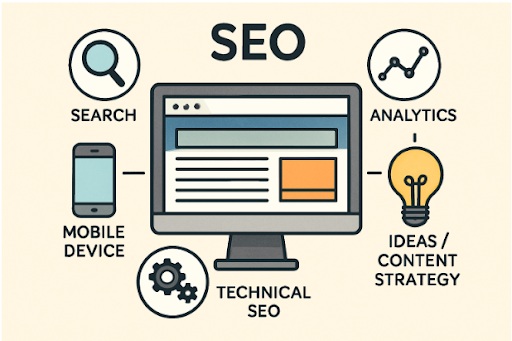
Key Takeaways
- SEO content strategies must align with user intent and adapt to search engine algorithms for lasting success.
- A well-structured website using topic clusters and pillar pages builds topical authority and supports higher rankings.
- Technical SEO elements such as schema markup and mobile optimization are essential for improving search visibility.
- AI-powered tools accelerate content optimization and ideation, maximizing efficiency and impact.
- Continuous performance monitoring ensures your strategy evolves in response to analytics insights and algorithm updates.
Table of Contents
- Understanding User Intent and Search Algorithms
- Structuring Content with Topic Clusters and Pillar Pages
- Implementing Technical SEO Elements
- Integrating AI-Driven Tools in Content Strategy
- Monitoring and Adjusting Content Performance
- Conclusion
Effective SEO today means more than keyword stuffing or chasing fleeting trends. As algorithms grow smarter, it is crucial to create value-driven content that satisfies user intent, answers real questions, and optimally structures site architecture for discoverability. By focusing on content quality, technical SEO, and strategic innovation, your website is positioned to grow sustainably in search engine rankings.
This comprehensive guide will explore the pillars of modern SEO content strategy, including aligning with user intent, organizing with topic clusters, leveraging technical improvements, and incorporating AI-driven solutions into your workflow. Additionally, you will learn how to monitor performance and adapt in a dynamic digital world, ensuring your website remains competitive regardless of industry shifts.
As content marketing continues to evolve, successful strategies prioritize genuine engagement and technical excellence. Following these best practices will help you build a content ecosystem that both search engines and users love, resulting in greater organic reach and higher conversions.
Understanding User Intent and Search Algorithms
Structuring Content with Topic Clusters and Pillar Pages
Implementing Technical SEO Elements
The technical infrastructure of your website greatly influences content visibility. Schema markup enables search engines to interpret the context behind your content, potentially leading to richer search results with enhanced features like review stars or FAQs. Mobile optimization is equally vital, as more users access websites from smartphones and Google now uses mobile-first indexing as the default. A technically sound site loads quickly, presents well across devices, and helps search engines crawl and index content efficiently. For further guidance, Moz offers thorough explanations of implementing technical SEO foundations that support every successful strategy.
Integrating AI-Driven Tools in Content Strategy
Artificial intelligence redefines how marketers approach SEO and content creation. Advanced AI tools analyze search patterns, identify relevant topics, and generate keyword ideas, streamlining the production process. They also help you monitor trends, spot competitive opportunities, and personalize on-page content to match specific audience segments. As the technology matures, leveraging AI ensures your workflow is both data-informed and adaptive, enabling your team to focus on higher-level strategy rather than repetitive tasks. Whether you use AI for idea generation, content audits, or predictive analytics, its integration has become a cornerstone of competitive digital strategies.
Monitoring and Adjusting Content Performance
The SEO landscape is constantly shifting, making ongoing monitoring and strategic refinement essential for maintaining and expanding search visibility. Regularly analyzing key performance indicators—such as organic traffic, bounce rates, dwell time, and conversions—using tools like Google Analytics helps determine which content is effective and where improvements are necessary. These frequent evaluations reveal opportunities for optimization, highlight underperforming pages, and ensure that prior SEO efforts continue to yield results. By responding to data insights, businesses can prevent content stagnation, better meet user intent, and adjust targeting to evolving trends. A proactive, data-driven approach to SEO not only sustains visibility but also enhances user engagement, driving consistent long-term growth and measurable ROI.