

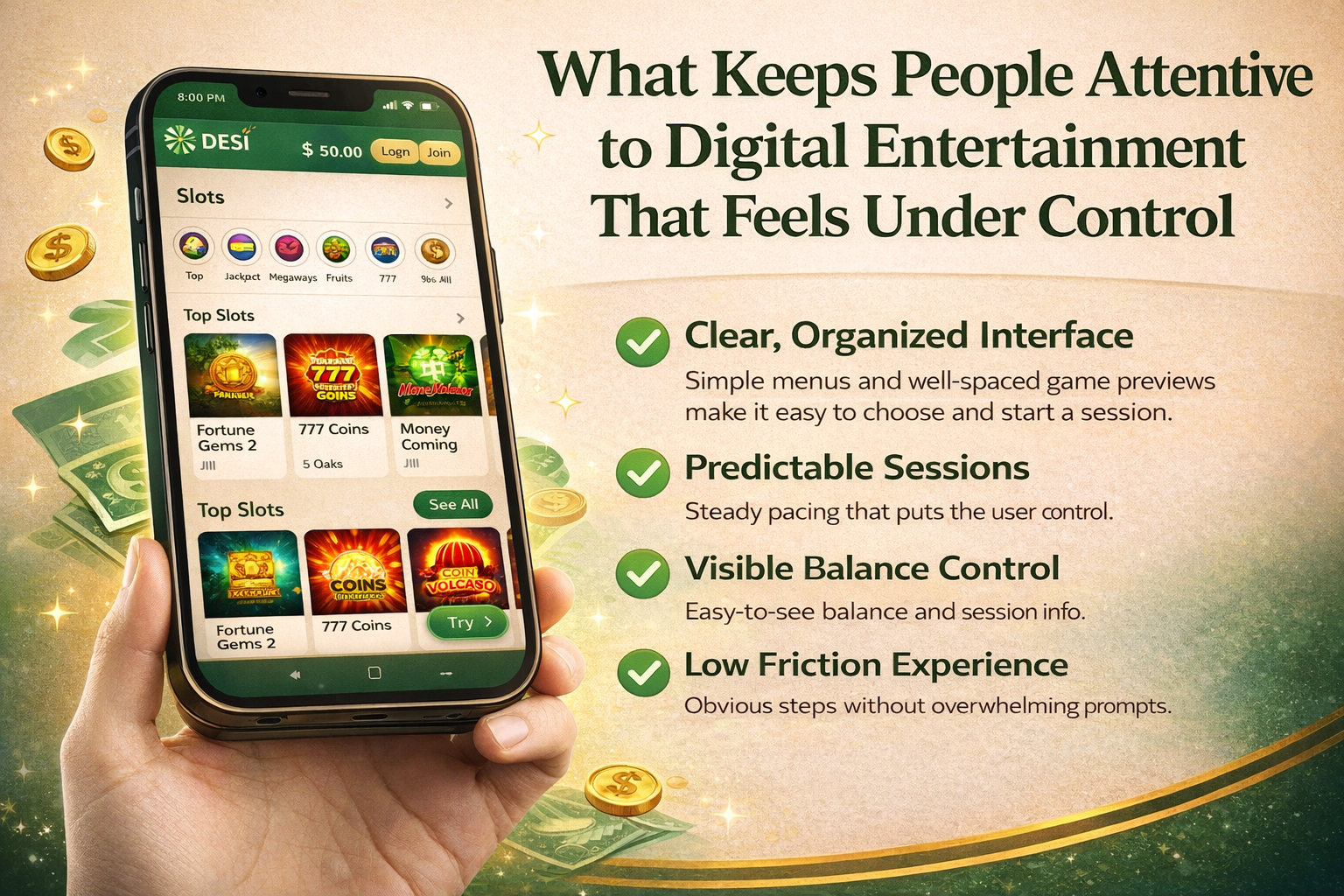
Mobile entertainment is evaluated as a matter of practicality. People open a service, they spend a few minutes there, and they can decide whether the experience felt clear, that it was comfortable, and that it’s worth it to revisit. That decision is rarely based upon a single flashy feature. It tends to be about pace and visual order, as well as the fact that the session was kept within parameters. The same refrain is true of finance tools, shopping apps, streaming services, and reel-heavy entertainment. Users come back when a product shows respect for time and makes it easy to keep effort low. They step aside when too many screens, too many prompts, or too much pressure begin to weigh down a visit. The products that feel easiest to trust in a cluttered digital marketplace are generally the ones that make each small interaction feel measured and easy to read and follow.
Why Predictable Sessions Matter More Than Big Promises
The point is also that it really isn’t a big deal to have an entertainment page on your mobile – people don’t open it for studying. Most calls are made in very short windows of time of the day, so the experience has to be right there and make sense right off the bat. You want to know where to tap, what the next step is, and what will happen in the session without having to sort through clutter or mixed signals. And when that pathway is accessible, the visit feels lighter and more considered. When the first screen is crowded, the mental workload exponentially increases, and the session becomes unattractive before it even opens. This is one reason why repeat visits tend to come from products that seem steady, not flashy. But with clear motion, a readable structure, and an appropriate rate of pacing, what you get is less likely to get ignored.
It’s the same philosophy that drives how people come to slot games online on mobile. They tend to be short-form entertainment, and therefore there’s the added pressure for the product to feel organized at the very first moment. With familiar menus, easy-to-read visual cues, and an easy start (without a long setup), the page is much easier to revisit later. People don’t want to relearn the system each time they come back. They want continuity. The most memorable sessions tend to have a clear flow, beginning to end successfully. This often makes it easier for them to accept even the shortest visit time–only minutes at best. In real life, predictability brings comfort, and this safety net returns visits way more than raw intensity ever could.
An Improved Interface Shifts How Value Is Described
Content matters, but so much more about the way we perceive value. It also derives from how much work the user really has to do leading up to the possibility of enjoying something enjoyable. When screens are crowded with conflicting messages and giant banners and distracting activity, people start to feel like the product is asking for far too much attention. An aesthetically pleasing interface changes that impression at once. It instructs the user where the central activity and context reside, where the supportive information should reside, and what actions really matter. That matters in entertainment because before the session is even halfway through, users typically determine whether a service feels worth their while to use. Put differently, the page can build or undermine confidence. Products that engage attention well usually do that by breaking down friction, restoring the visual order by keeping the main activity at the eye level, and allowing the user to engage in a focused conversation.
Users See When a Product Is Considered to Be Spend Avoidable
Any sort of entertainment related to money also looks through a second filter. And consumers take note of whether the service’s stability is felt, whether the choice is easy to track, and whether the experience promotes control over impulsive behavior. That’s where good design works, in practice. Clear account pages, obvious balance information, readable session history, and logical payment flows drive how safe it feels the user can visit. In return for any user who has entered in as light entertainment, the expectation still lingers that the page itself should promote awareness rather than guide them toward an infinite series of actions. Products that are respectful of that space are more likely to establish trust because they make it easier for people to give themselves a timeline that makes their progress easy. When that illusion of control goes away, that session starts to loom less inviting and more strenuous, which generally reduces visits and erodes longevity.
The Strongest Digital Products Feel Calm, Clear, and Worth Repeating
It is the moment when you start to have visual pressure on your sessions. Page can be active without becoming tiring. The issue begins when a user feels that movement, entreaties, and competitive prompts fill the space with too much static, and the user no longer can feel a sense of what to do next. Once it does, even a brief session can start to seem longer than it is. People are not likely to articulate the problem in design terms, and the effect is easy to detect in behavior. They leave faster, interact less, and are less likely to return. Visual pressure also diminishes decision-making because it converts each second into a battle for attention. Better products avoid that trap by showing each screen exactly where it stands in the hierarchy. The central action remains clean. You know, supporting details are secondary. Basic usability is not overwhelmed by promotional elements. That balance makes for more consistent visits, and stable visits tend to get repeated attention.